Case Study — AI Agent Orchestration
TravelWonder.land
One person. One AI agent stack. The output of a full production team. Built and operated entirely through AI-agent orchestration — sole designer and AI engineer, from product build to automated content pipeline.
Why build this, and what it proves
After 30 years advising Fortune 500 organizations on UX strategy, the most important question an enterprise client can ask is: does this consultant actually understand the AI systems they're advising on?
TravelWonder.land is the answer. Not a prototype. Not a concept deck. A live, functional AI product — designed, engineered, and built by one person through AI-agent orchestration.
The project has two independent tracks. First, the consumer-facing travel platform itself — the AI itinerary planner and its companion admin operations layer — designed and built in approximately 30 days starting April 9, 2026. Separately, the Travelwonderland YouTube channel launched May 25, 2026, and after identifying repeatable production bottlenecks, an 8-stage automated content pipeline was built incrementally starting June 18, 2026. Every automation stage emerged from a real constraint — none were planned upfront.
This is the only project in this portfolio that Disney, Dell, and Thomson Reuters cannot replicate. It is direct, first-person proof of building AI systems, not just advising on them.
- Role: Sole Designer & AI Engineer
- App build started: April 9, 2026 (approx. 30 days)
- YouTube channel launched: May 25, 2026
- Pipeline stages: 8, automated, built incrementally from June 18, 2026
- Stack: Claude Code · Base44 · ElevenLabs · CapCut AI
The Product: AI Travel Itinerary Planner
TravelWonder.land was built entirely through vibe coding — directing Claude Code and Base44 with intent rather than writing code. The design process was prompt-driven: UX decisions became agent instructions, and the interface emerged from strategic intent rather than a traditional design-to-engineering handoff.
Key UX Design Decision: the itinerary planner needed to resolve a core AI UX tension — users want personalized recommendations but distrust algorithmic outputs they can't verify. The design addressed this through progressive disclosure: surfacing AI-generated suggestions at a high level first, then letting users drill into the reasoning behind each recommendation.

TravelWonder.land — AI-powered travel itinerary planner, built via vibe coding on Base44
The admin dashboard was built in parallel with the consumer product, using the same vibe-coding methodology. It's a travel-agency operations layer — tracking leads, bookings, customers, and revenue — demonstrating that AI-agent orchestration scales from user-facing product to internal business tooling.
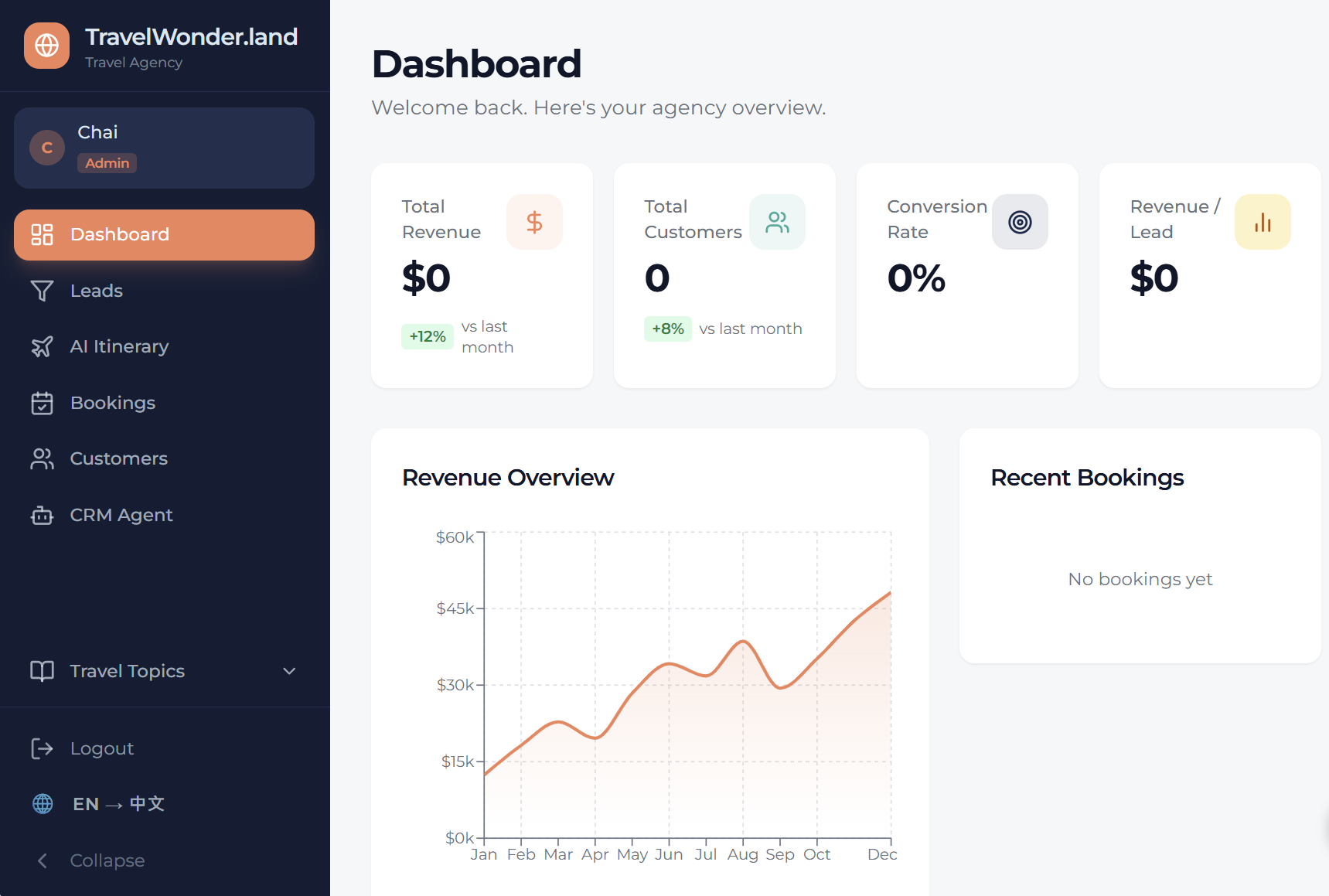
Admin dashboard for tracking leads, bookings, customers, and revenue, built alongside the consumer-facing product
Current status: the itinerary planner and admin CRM are live and fully functional at travelwonder.land.
The 8-Stage Automation Pipeline
After the third YouTube video, repeatable bottlenecks became visible. Rather than treating them as workflow inefficiencies, each one became a design problem — a stage in the pipeline to be specified, automated, and connected. The pipeline was built incrementally, one stage at a time, each triggered by a real constraint rather than planned upfront. This is how AI UX governance works in practice.
-
1
Script Parsing (Claude Code) — parses raw script into structured segments: topic, duration, visual cue, voiceover instruction. Removes manual formatting entirely.
-
2
B-Roll Sourcing (Claude Code + Stock API) — queries stock libraries against parsed visual cues, returns ranked candidates. Designer approves; agent ingests. Removes the single largest manual time cost per video.
-
3
Audio Processing to Broadcast Spec (Automation) — normalizes, denoises, and levels raw audio to YouTube broadcast specification automatically.
-
4
ElevenLabs AI Voiceover (ElevenLabs) — script segments routed with consistent voice profile and pacing instructions; voiceover generated at production quality without studio time.
-
5
SEO Metadata Generation (Claude Code) — generates title variants, description, tags, and chapter markers from the parsed script.
-
6
Video Editing (CapCut AI) — assembles B-roll against the voiceover timeline, applies captions, transitions, and brand treatment.
-
7
Thumbnail & Shorts Marketing (CapCut AI + Claude Code) — generates thumbnails, Shorts cuts, and social cards from the same source content.
-
8
Scheduled YouTube Publishing (YouTube API) — pushes completed video, SEO metadata, and thumbnail with a scheduled publish time. Zero manual upload interaction required.
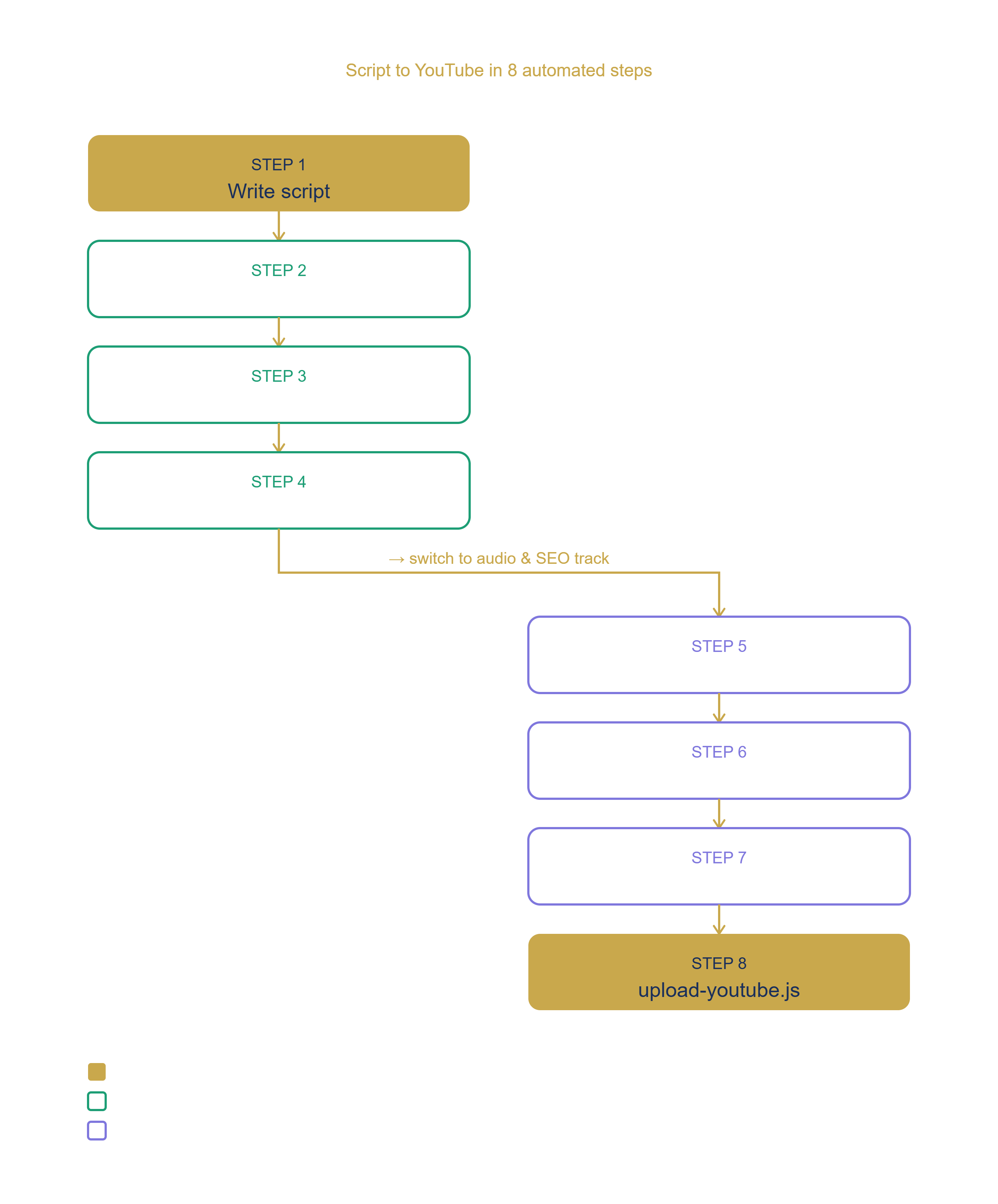
8-stage automated YouTube production pipeline — built incrementally from June 18, 2026
The Channel: Travelwonderland
The 8-stage pipeline exists to feed one destination: the Travelwonderland YouTube channel, launched May 25, 2026. Every video published through the pipeline — script to screen — appears here, alongside Shorts distributed across YouTube and TikTok.
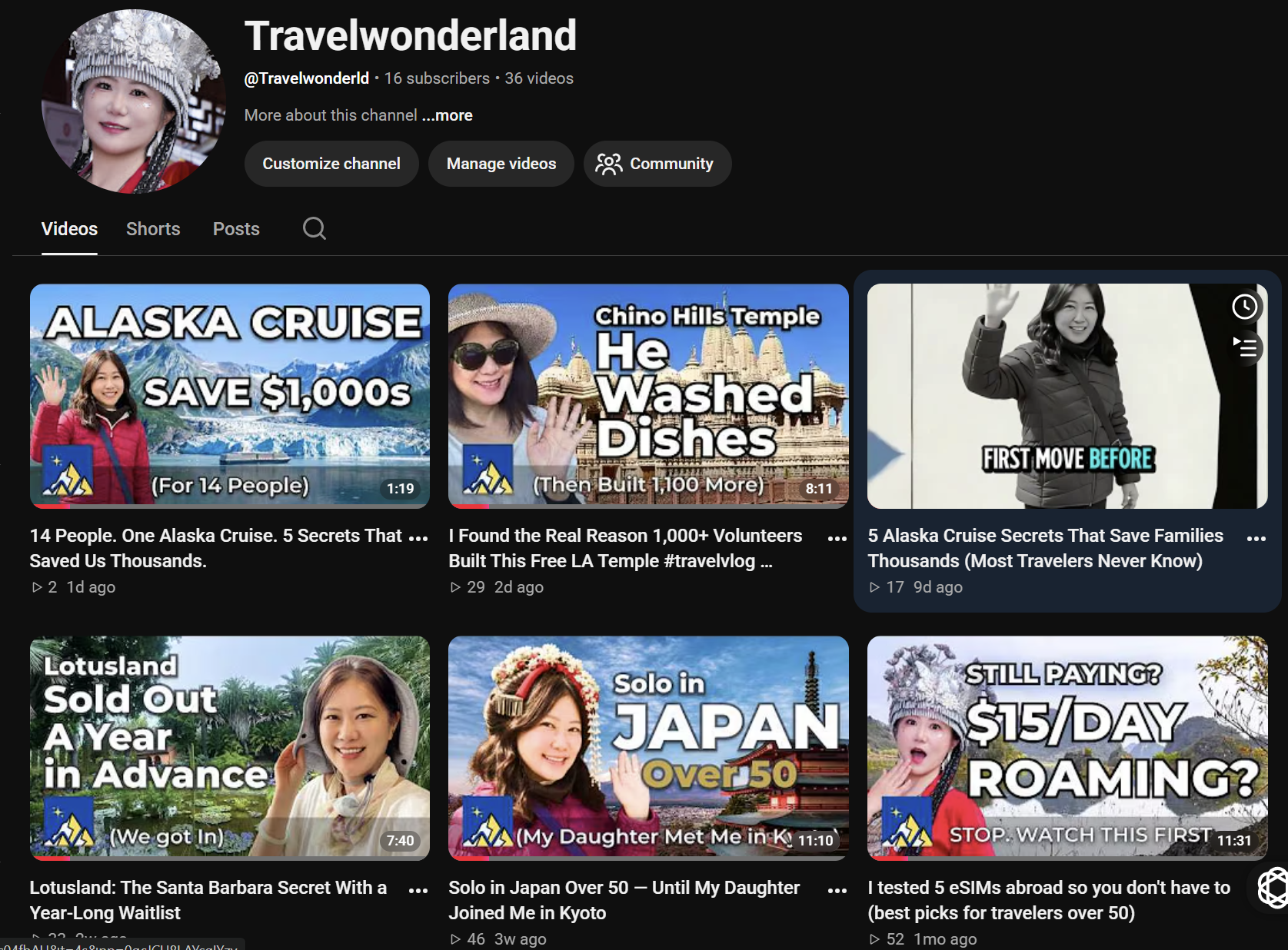
The Travelwonderland YouTube channel.
What Building This Taught — AI UX Insights
Insight 01 — Bottlenecks reveal the architecture. The pipeline wasn't designed upfront — it emerged from friction. Each automation stage was added when a manual step became the rate-limiting constraint. This is how AI systems should be built in enterprise: incrementally, from observed behavior, not theorized requirements.
Insight 02 — Intent is the new interface. Vibe coding collapses the traditional UX-to-engineering handoff. When design intent becomes agent instruction directly, the feedback loop tightens from weeks to minutes. Enterprise teams building AI products need to learn how to specify intent, not just deliverables.
Insight 03 — Human oversight points are design decisions. Every stage where human review is required — approving B-roll candidates, signing off on SEO metadata — is a design choice about where human judgment adds irreplaceable value. Identifying those points is the core of AI UX governance.
Insight 04 — One person can operate like a team, with the right system. The constraint of being solo forced better system design. Every decision about automation versus manual intervention had a direct personal cost. That constraint produces clarity that committees cannot. Enterprise AI teams should create the same forcing function.
What This Means for Your Organization
The same AI-agent orchestration principles that run TravelWonder.land apply directly to enterprise AI product design. Organizations spend significant budget building AI products that fail at adoption because the UX layer was designed by people who have never operated a real AI system. TravelWonder.land demonstrates what an AI UX strategist looks like who has actually run multi-agent pipelines, made real-time design decisions under production constraints, and built feedback loops that improve with iteration.
Three questions every enterprise AI team should be asking:
- Where are your human oversight points — and are they design decisions or accidents? Most teams don't know which manual steps exist because they're strategic and which exist because no one designed around them.
- Is your team specifying intent or writing requirements? The shift from requirements documents to intent specifications is one of the more significant UX changes in the AI era.
- What would your pipeline look like if you added one automation at a time, starting from your biggest bottleneck today? TravelWonder.land's pipeline didn't exist on day one — it emerged from observation.
Proof of concept: one person, the output of a production team
- AI itinerary planner and admin CRM, live and functional — built solo in approximately 30 days starting April 9, 2026, via vibe coding on Base44.
- 8-stage automated YouTube production pipeline, fully operational — from script to published video with minimal manual intervention per episode, built incrementally from June 18, 2026.
- 5K YouTube views and 92 Shorts likes — produced entirely through the automated content pipeline, zero outsourced production.
- Full-stack capability demonstrated — UX design, AI engineering, content production, SEO, and distribution, all directed through AI agents rather than a traditional team structure.
- 4 transferable AI UX governance insights, documented from real production and product-building experience rather than advisory theory alone.